
Watch a quick walkthrough or book a demo
Request successful.
Our team will contact you within one business day.
Pick a time that works for you and we'll send the invite.
Oops! Something went wrong while submitting the form.
Sign-up successful!
Check your inbox for a link to activate your free Perdoo account.


Henrik van der Pol
2
min
read
The goal management framework OKR (Objectives & Key Results) can bring tremendous value to organizations, if implemented correctly. The OKR success stories from Google, LinkedIn, and Intel inspired many other companies to adopt the framework. However, some organizations fail when implementing OKR.
A common reason for failure is misunderstanding among teams of the role that team OKRs play. For OKR to be successful, team OKRs should reflect and contribute to your organization's strategy.
The role of team OKRs
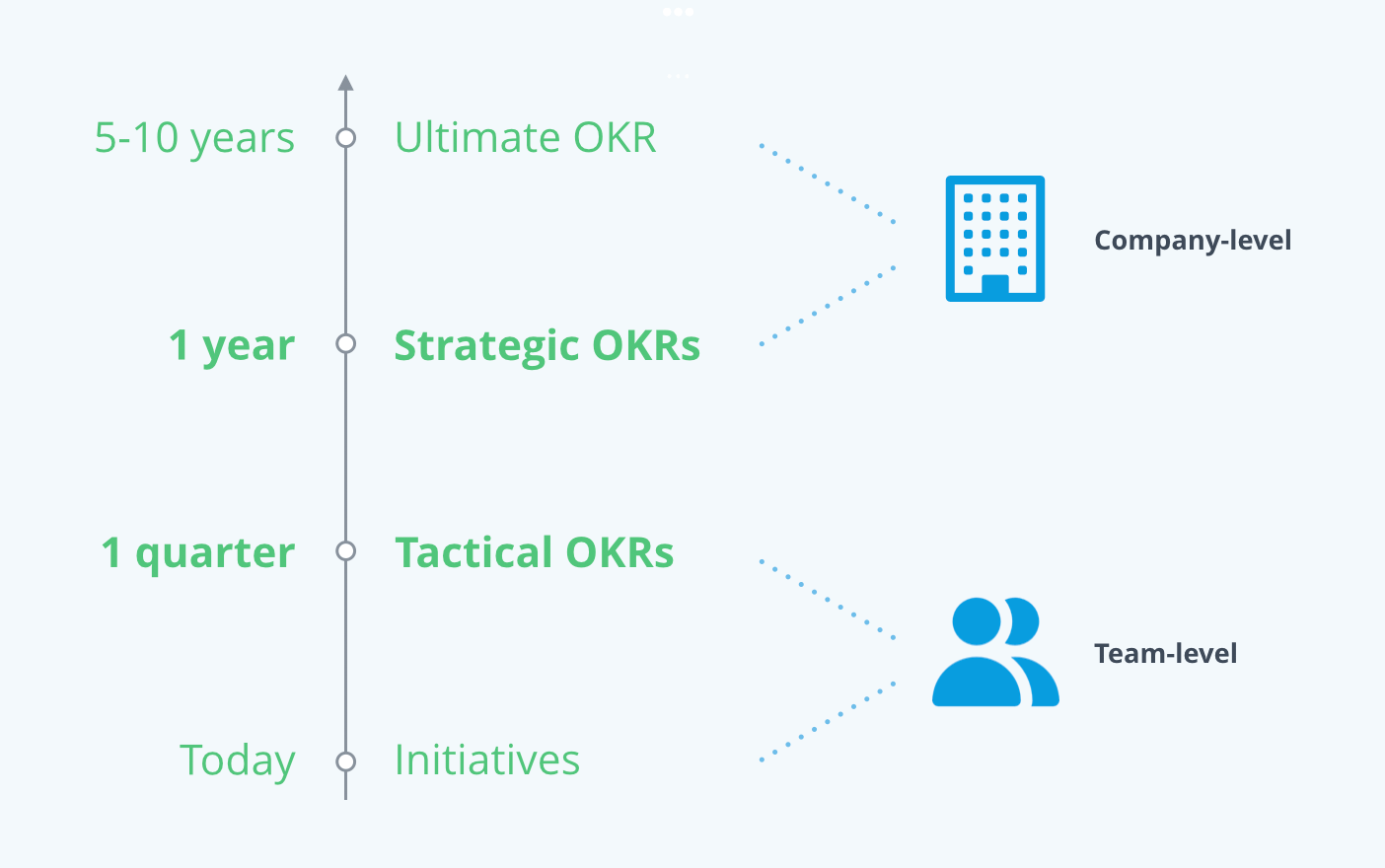
OKRs should embody your organization’s strategy and tactics. Strategy and tactics are essentially goals, and without these everyone would be flying blind.
Strategy is usually composed of annual goals (or OKRs), tactics are quarterly goals (or OKRs) that help realize the strategy.
Most organizations define strategy at the company-level and leave the execution (i.e. tactics) up to teams or departments. Teams can further develop initiatives, which cover the work they will do in order to achieve the tactical OKRs.
Why team OKRs are critical to success
Quarterly team OKRs express what tactics the team will deploy, and what results the team will need to achieve in order to help the organization realize its long-term strategy. Everyone has a busy schedule and urgent things will constantly pop-up, but whatever is reflected in your OKRs deserves priority over everything else. This is also why it’s crucial to update OKRs regularly to see how you progress on what you’ve agreed is most important. That’s why it’s so important to always bring up your team OKRs in your weekly or bi-weekly team meetings.
OKRs give every team a sense of direction and accomplishment. But they are also a reason to say “No” to things that fall outside of the scope of the OKRs. If every team creates their OKRs as if these were the only things they will be working on that quarter, it will ensure a successful OKR program whilst helping the organization realize its strategy.
Team OKR checklist
When you create your team’s OKRs, make sure they:
- help realize the company-level OKRs
- reflect the most important results your team needs to achieve that quarter
- are realistic but ambitious
When you start working on your team OKRs, make sure to:
- update progress at least once a week
- bring them up in your weekly or bi-weekly team meetings

Ready to get started?
Free for up to 5 people.